


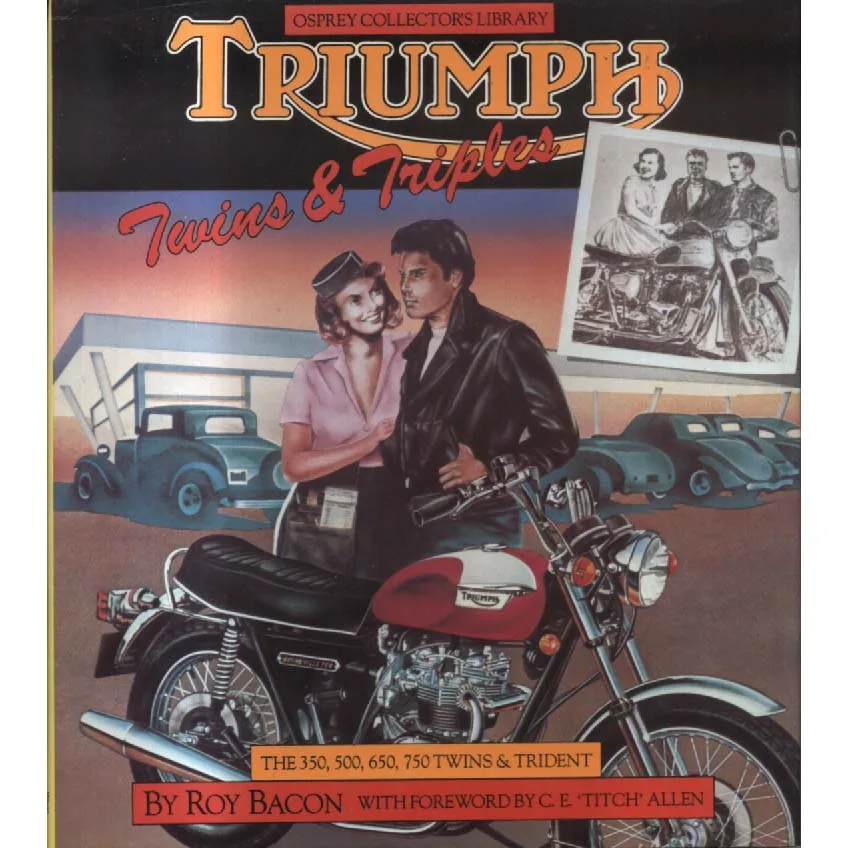
Triumph Twins And Triplets - The 350 500 650 750 Twins And Trident
Publisher: Osprey
Format: Hardback
ISBN: 0850454034
There are motorcycles that merely transport you from one place to another, and then there are Triumph twins and triplets, which prefer to arrive as a full philosophical position on noise, torque, British engineering, and the noble idea that life is improved by polished metal vibrating enthusiastically beneath you.
Triumph Twins and Triplets – The 350 500 650 750 Twins and Trident (1985) by Roy Bacon, published by Osprey, is exactly the sort of book that sends sensible modern transport scuttling back to its plastic fairings in embarrassment. This is a celebration of motorcycles from the age when bikes were not merely designed to function, but to rumble, gleam, leak character from every gasket, and establish a rider’s identity long before anyone had the chance to ask awkward questions.
Roy Bacon, of course, knew this territory extremely well. His books have the air of someone who genuinely understands that old motorcycles are never just old motorcycles. They are tribes, loyalties, arguments, garage obsessions, sources of immense pride, and occasional causes of oily regret. In this case the focus is on Triumph’s great lineage of 350, 500, 650, and 750 twins, plus the mighty Trident, which together represent a whole era of British motorcycling at its most iconic, charismatic, and mechanically opinionated.
Because Triumph did not build motorcycles in a spirit of timid moderation. These were machines with presence. The twins in particular have that beautiful British combination of elegance and stubbornness: handsome tanks, purposeful lines, engines that seem to throb with offended dignity, and a general refusal to be mistaken for mere appliances. The Trident, meanwhile, added extra cylinders and a faint air of escalation, as though Triumph had decided that if two pistons were good, three might be even better provided everything stayed mostly attached.
This is the joy of classic motorcycle history. The specifications matter, certainly, but only up to a point. What really matters is that these bikes carry whole worlds with them: the Ace Cafe spirit, the golden age of British roadsters, the rise of Japanese competition lurking over the horizon, the romance of speed mixed with the practical need to know where your spanners are. A Triumph twin is not just a machine. It is a sound, a silhouette, a way of standing in a garage and looking pleased with yourself.
And there is something deeply endearing about the British motorcycle tradition at its peak. Italian bikes might have flair, German bikes discipline, Japanese bikes relentless competence. British bikes, especially Triumphs, had charisma by the bucketful. They seemed to say that engineering should be robust, handsome, and slightly heroic, even if this occasionally involved a working relationship with vibration, weather, and the concept of “character” doing rather a lot of diplomatic heavy lifting.
Bacon’s book will appeal to the dyed-in-the-oil Triumph devotee, of course, but also to any reader who enjoys motoring history, industrial design, or that very specific pleasure of looking at a machine and thinking, “Yes, that is exactly what a motorcycle ought to look like.” It is a record of models, development, differences, and evolution, but also of an entire motoring culture in which bikes were expressions of taste, allegiance, and mildly rebellious good sense.
This Good copy from the rev-happy vaults of Crappy Old Books offers all the pleasure of a proper vintage motorcycle title: informative, affectionate, and entirely ready to sit beside workshop manuals, old issues of Motor Cycle News, and a growing conviction that modern vehicles are all a bit too well-behaved. It is the kind of book one buys partly for reference and partly because it feels morally correct to own a Roy Bacon title if one has ever admired a parallel twin in profile.
The Triumph range covered here is especially rich in myth. The 350s and 500s carry a leaner, more nimble charm. The 650s are practically a national institution in chrome and combustion. The 750s and Trident push things onward with larger ambitions and a hint of end-of-era grandeur. Together they tell the story of a manufacturer that helped define British motorcycling, right down to the note from the exhaust and the grease under the fingernails.
In short, Triumph Twins and Triplets is a handsome, satisfying tribute to motorcycles that managed to be both mechanical objects and emotional commitments. It celebrates the bikes that people polished, rode, swore at, adored, restored, and defended in endless conversations with near-religious fervour.
A splendid book for anyone who believes motorcycles should not merely start and stop, but also stir the soul, shake the paving slabs, and leave behind the faint suspicion that civilisation may already have peaked somewhere around a well-kept Bonneville.
Keep browsing: See more Transport books Other books by Roy Bacon
